Storm Damage Happens Fast — Your Response Matters
The Inland Empire's Santa Ana wind events rank among the most powerful in the continental United States. Gusts exceeding 60 mph are not unusual in Rancho Cucamonga, particularly in communities like Alta Loma and Etiwanda that sit near the mountain passes that funnel and amplify the winds. Severe thunderstorms — while less frequent — can bring hail and driving rain that damages even relatively new roofing systems.
When a storm hits, homeowners often feel uncertain about what to do next. Should you call your insurance company first? Get on the roof yourself to check? Wait to see if there are leaks? This guide walks you through the right sequence of steps to protect your home, document your damage properly, and avoid the mistakes that make the insurance and repair process harder than it needs to be.
Step 1: Stay Safe — Don't Get on the Roof Yourself
After a storm, your instinct may be to climb up and assess the damage directly. We strongly advise against this. Wet shingles are extremely slippery, and wind events can loosen sections of roofing material that may not look unstable from a distance. Fallen debris, downed utility lines, and weakened structural elements create additional hazards that aren't obvious until you're already in a dangerous position.
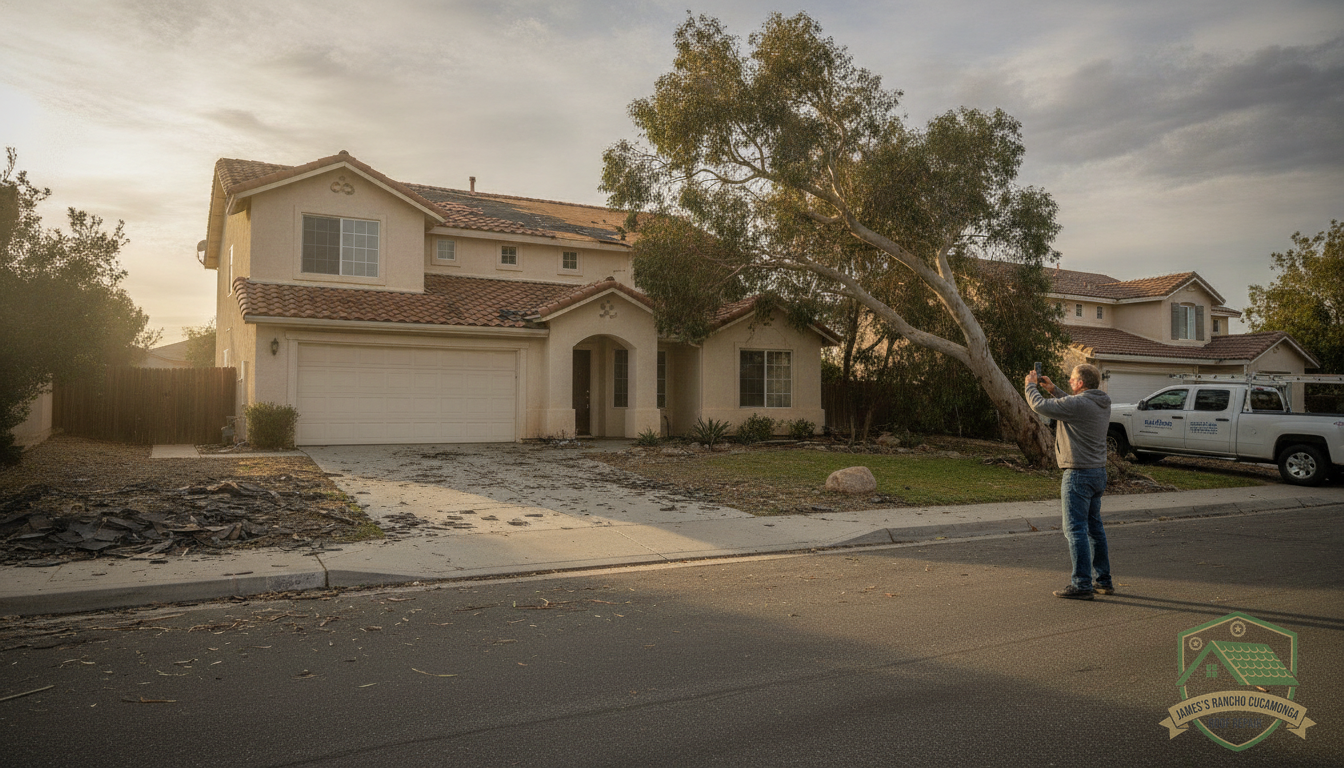
Instead, do a careful visual assessment from the ground. Walk the perimeter of your home and look for:
- Shingles or tiles on the ground or in the yard
- Visible sections of exposed dark felt underlayment on the roof surface
- Bent, detached, or missing gutters
- Tree branches resting on or against the roof
- Dented or displaced ridge cap material along the peak of the roof
Photograph everything you can see from ground level. These initial photos establish a pre-inspection baseline that can support your insurance claim even before a professional assessor arrives.
Step 2: Check the Interior for Active Water Intrusion
Once it's safe to be inside, check your attic space (if accessible) and every room on the top floor for signs of water entry. Look for:
- Active dripping from the ceiling
- Wet insulation in the attic
- New water stains appearing on ceilings or the tops of walls
- Daylight visible through the roof decking in the attic
If you find active water intrusion, place buckets to capture dripping water and protect belongings, but do not attempt temporary roof repairs yourself. A professional can deploy emergency tarping safely and properly. Our storm damage roof repair service includes emergency tarping with secured polyethylene sheeting when active water intrusion is present — call us at +19095328328 and we'll respond promptly.
Step 3: Call a Professional Roofer Before Calling Your Insurance Company
This step surprises many homeowners, but it is consistently the advice of experienced public adjusters and roofing professionals alike. Here's why: your insurance adjuster is trained to assess claims efficiently for the insurer, not necessarily to identify every form of storm damage on your roof. A professional roofer who specializes in storm damage assessment will identify damage that an adjuster might miss — wind-lifted shingles that have re-laid themselves, hail bruising on the asphalt mat, damaged pipe boots, and bent flashing components that aren't obvious to an untrained eye.
Having a detailed professional inspection report with photographs in hand before your adjuster's visit gives you a documented basis for your claim that is far harder to dispute than a homeowner's verbal account. James's Rancho Cucamonga Roof Repair provides written inspection reports with photos taken at every damage point — documentation your adjuster needs to properly evaluate your claim.
Step 4: Document Everything Thoroughly
Once a professional has inspected and documented the roof, make sure you also document interior damage yourself:
- Photograph water stains, wet insulation, damaged ceilings, and any personal property affected by water intrusion
- Keep all receipts for temporary measures (tarps, water damage mitigation, hotel stays if the home became uninhabitable)
- Write a timeline of events — when the storm occurred, when you noticed damage, when you called for professional help
Many homeowner's insurance policies have deadlines for reporting storm damage — commonly ranging from one year to the policy renewal date, though this varies by carrier. Delaying your claim can result in denial even for legitimate damage, so begin the documentation and reporting process as quickly as possible after the storm.
Step 5: Understand What Your Insurance Covers
Standard homeowner's insurance policies in California typically cover sudden storm damage — wind, hail, falling trees — but do not cover damage resulting from deferred maintenance or wear and tear. This distinction matters during the claims process. If your adjuster determines that existing deterioration (such as aged shingles with advanced granule loss) contributed to the damage, they may reduce or deny the claim.
This is another reason why proactive roof inspections have real financial value — they create a documented maintenance record showing your roof was in reasonable condition before the storm event. Homeowners who can demonstrate ongoing roof maintenance are in a stronger position when negotiating storm damage claims.
Step 6: Get Permanent Repairs Completed Promptly
Emergency tarping is a temporary measure. The longer your roof has an unrepaired opening — even under a tarp — the greater the risk of additional water intrusion, mold growth, and interior damage. Once your insurance claim is moving forward, schedule your permanent storm damage repairs as soon as your carrier confirms coverage.
Depending on the extent of damage, repairs may range from targeted roof leak repair and flashing replacement to a full shingle roof replacement when damage is widespread. Our team will walk you through the scope of work honestly, matching the repair approach to what the damage actually requires — nothing more, nothing less.
Serving Rancho Cucamonga and the Surrounding Inland Empire
James's Rancho Cucamonga Roof Repair responds to storm damage calls throughout Rancho Cucamonga and neighboring communities including Alta Loma, Etiwanda, Upland, Ontario, Fontana, and Montclair. We're available seven days a week
Confirm Availability
Call +19095328328 or fill out our online form for a free, no-obligation quote.
Request Free Quote